Need a quotation?

Dear Customers, if you wish to receive a quotation, we kindly ask you to fill in below form. Once the form has been duly filled and submitted, the rates will be quoted to you.

[contact-form-7 id="1"]

Need a quotation?

Dear Customers, if you wish to receive a quotation, we kindly ask you to fill in below form. Once the form has been duly filled and submitted, the rates will be quoted to you.

[contact-form-7 id="1"]

SEARCH SITE BY TYPING (ESC TO CLOSE)

Skip to Content

Daily Archives: 18 March 2026

“Ghost” Era in the Blue Homeland: AI-Powered USV Project from Mersin University

Mersin University has launched a new project, supported by TÜBİTAK, to develop an unmanned surface vessel (USV) with low radar visibility and high maneuverability. The project, led by Prof. Dr. Caner Özdemir, Head of the Telecommunications Division at the Department of Electrical and Electronics Engineering, Faculty of Engineering at Mersin University, has been funded under the TÜBİTAK 1001 program.

The study, to be carried out in collaboration with Piri Reis University and İzmir Kâtip Çelebi University, aims to design indigenous unmanned surface vessels with low radar visibility and high hydrodynamic performance.

Unlike traditional ship design processes, the project will adopt an integrated approach combining electromagnetic scattering analysis with computational fluid dynamics simulations.

Upon completion, the project will deliver two preliminary designs for the defense industry: an unmanned reconnaissance and surveillance vessel of 12–13 meters in length, and an unmanned kamikaze vessel of 6–7 meters.

While Mersin University will be responsible for radar cross-section simulations and AI-based optimization, Piri Reis University and İzmir Kâtip Çelebi University will lead the computational fluid dynamics processes.

READ MORE

IMO Data Regulations Tighten: Experts Warn of a New Compliance Era

The international maritime industry is racing against time to comply with the expanded Data Collection System (DCS) requirements. Germany-based CM Technologies has issued a warning to shipowners and operators, emphasizing that data required for 2027 reporting must be collected starting from the very first days of 2026.

Although the new regulation—covering all ships of 5,000 GT and above engaged in international voyages—officially entered into force in August 2025, the reporting timeline is based on a full calendar year.

The updated rules require not only total fuel consumption data, but also far more detailed and disaggregated information, including fuel usage across different onboard systems, distance traveled, and voyage duration.

Experts highlight that the new system represents a shift from “estimation and reconciliation” to “direct measurement.” Incomplete or inconsistent datasets may prevent vessels from obtaining their Statement of Compliance.

READ MORE

A New Era for European Shipyards: What Does the “Made in EU” Package Include?

The European Commission aims to protect the shipbuilding industry within the European Union, ensure that strategic equipment is produced within EU borders, and strengthen local production through a new industrial package to be announced.

Prepared under the “Made in EU” approach, the package seeks to reduce external dependency in critical sectors, particularly in maritime.

According to the draft regulation under development, public procurement will be shaped not only by price, but also by criteria such as EU origin, sustainability, and supply chain security. In this way, the production of strategic maritime assets—such as ferries, research vessels, icebreakers, and tugboats—will be encouraged within EU shipyards.

Within the scope of the package, it is envisaged that the European Investment Bank and similar financial institutions will facilitate access to financing for ships and equipment produced in the EU. This aims to enhance the competitiveness of European shipyards and ensure that new orders remain within the Union.

This step is expected to mark the beginning of a new era for the European shipbuilding industry.

READ MORE

The Latest Shipbuilding and Repair Principles Are Positive, but Require Careful Review

The Turkish Shipbuilders’ Association (GİSBİR) held its second Board of Directors meeting of 2026 on Tuesday, January 20. The meeting, which took place at the GİSBİR headquarters, was chaired by Murat Kıran and conducted in a hybrid format with members attending both in person and online.
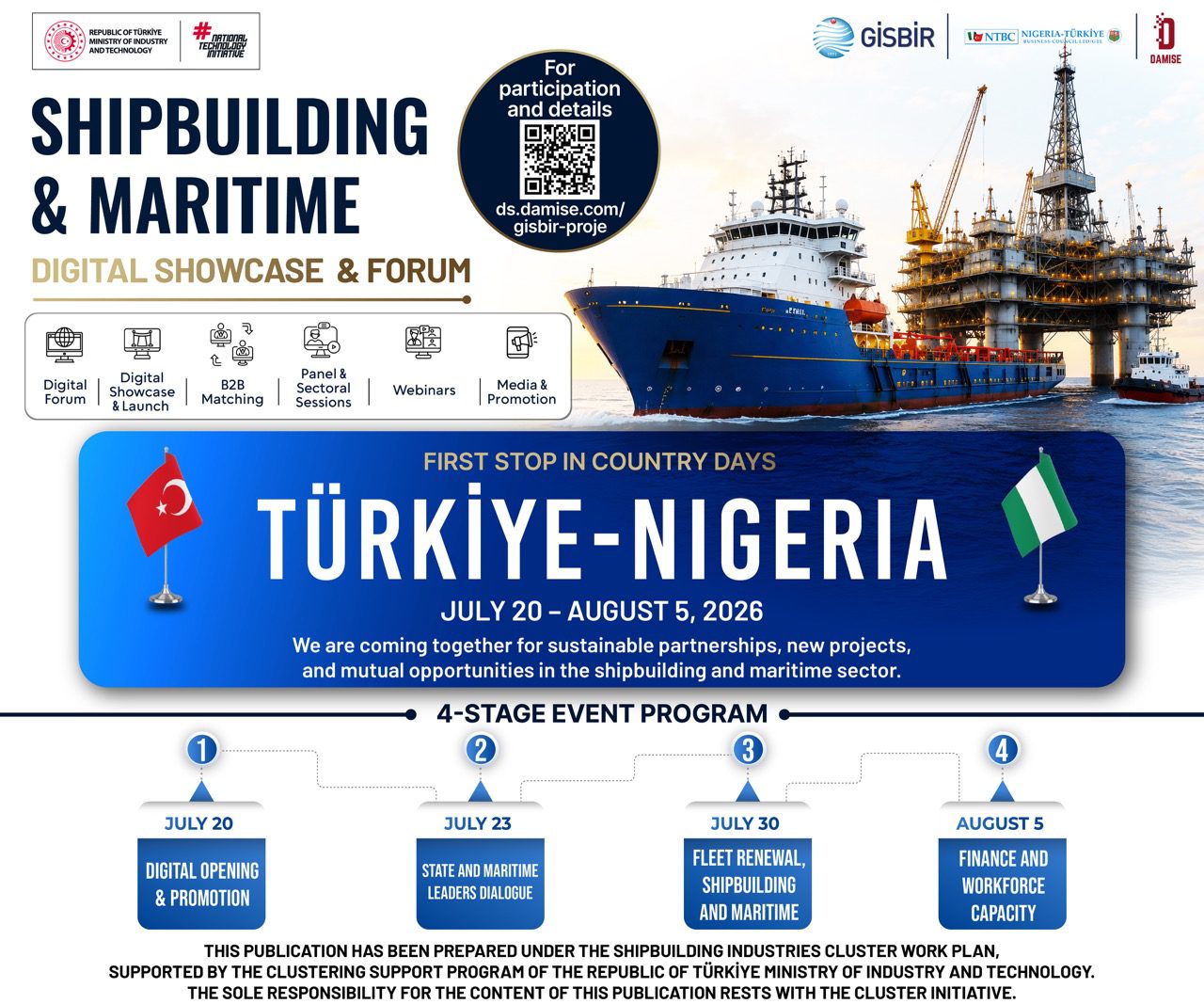
During the meeting, new shipbuilding and ship repair principles were thoroughly discussed and carefully evaluated.

READ MORE